
Skip to content

Cliff nesting seabird group

Our cliffs support internationally important numbers of breeding seabirds. Lundy supports over 90% of England’s Manx Shearwaters.

In 2000 there were just 13 Puffins on Lundy. Following the eradication of rats there are now around 1,300.

Choughs may soon breed again on Devon’s coast.

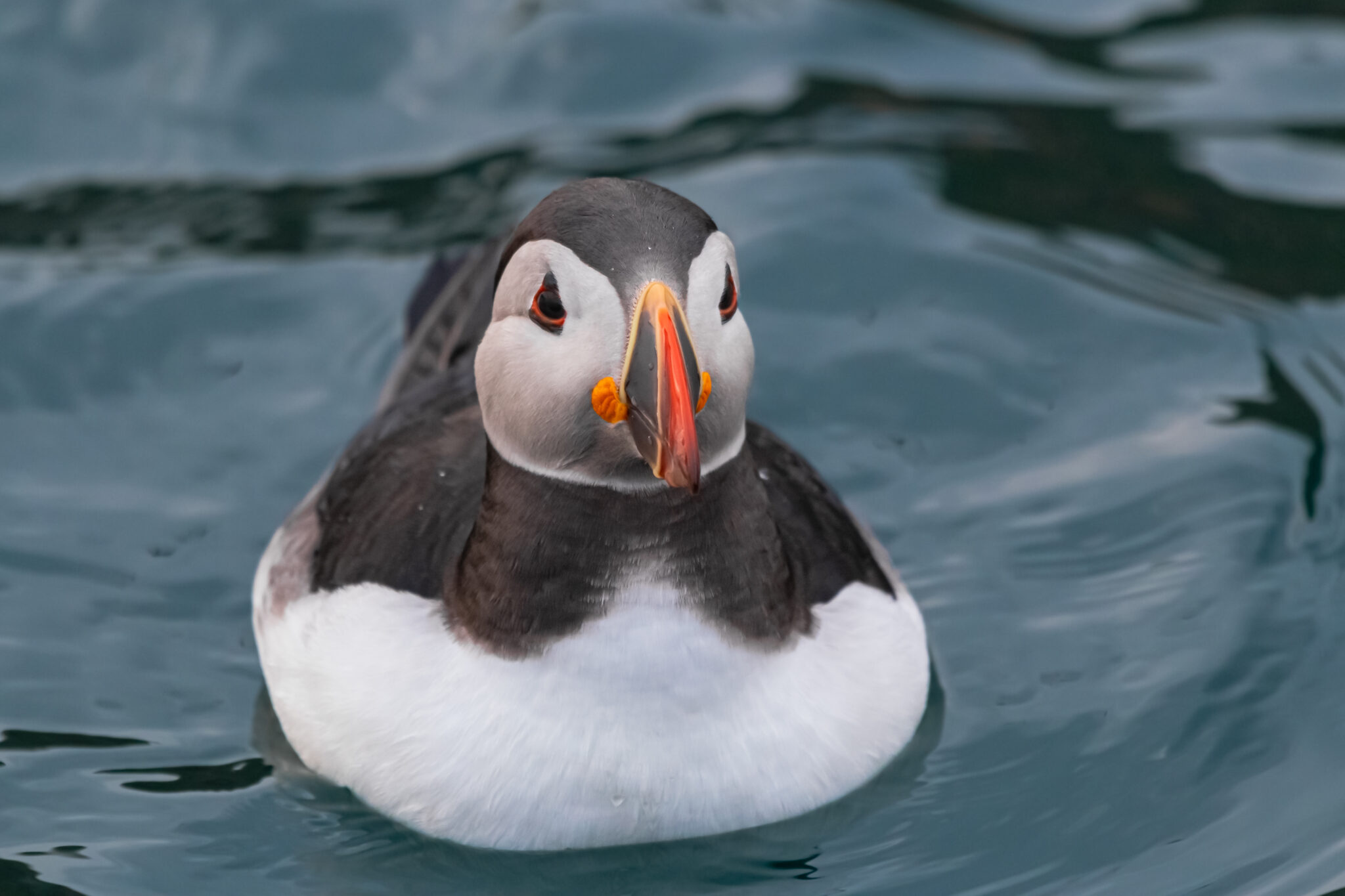
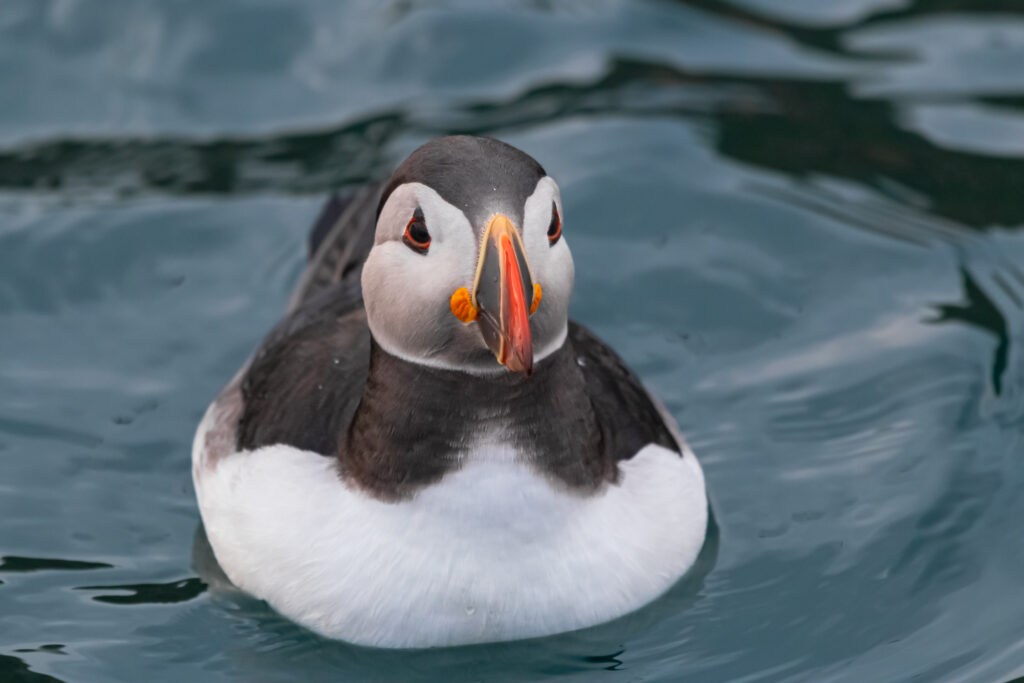
A puffin bobs on dark blue water, facing the camera. The top of the puffins head, back and wings are black, and the bottom is white. The distinctive orange marked bill is visible.

Puffin, J. Shelton

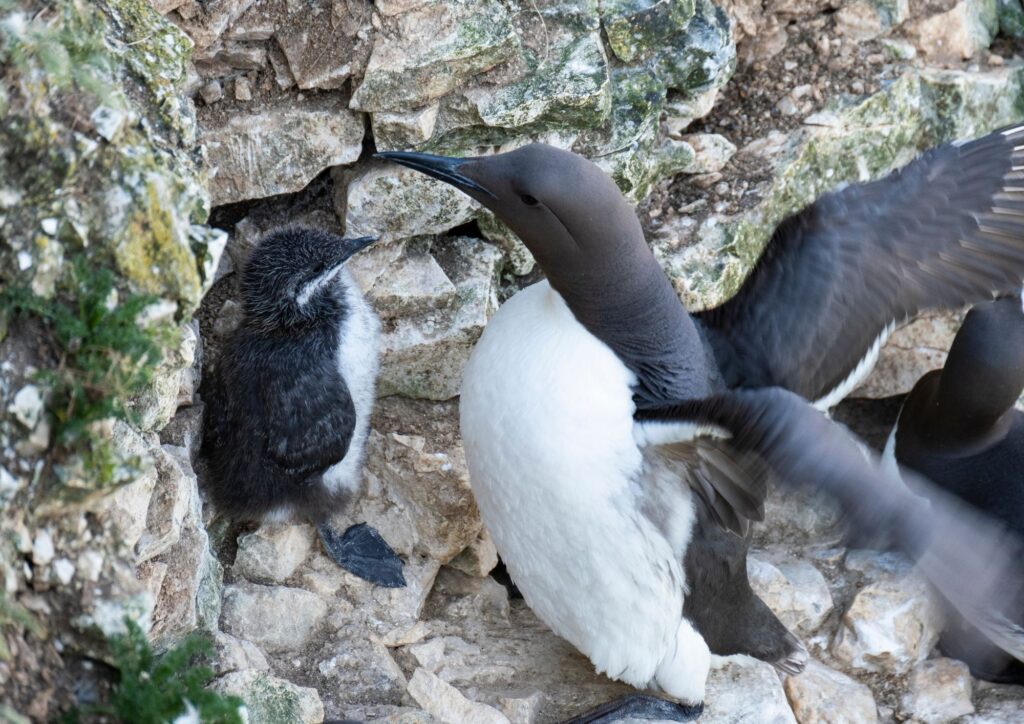
Guillemot, Sam Turley – RSPB images

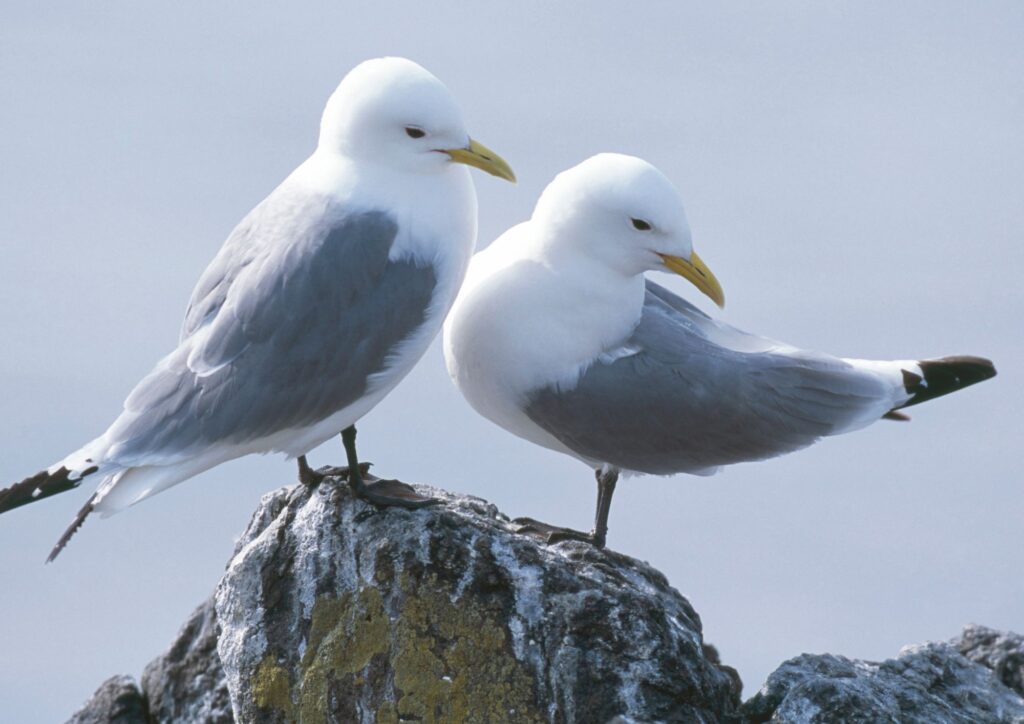
Kittiwake, Andy Hay – RSPB images

1. About

Devon’s sea cliffs support internationally important numbers of breeding seabirds which are discussed as a group of 11 Devon Species of Conservation Concern:

Kittiwake, Razorbill, Guillemot, Shag, Herring Gull, Great Black-backed Gull and Lesser Black-backed Gull nest on cliffs (including ledges, vegetated slopes) and cliff tops. Key sites include Straight point near Exmouth which is an important Kittiwake site, Berry Head which supports Guillimots and the Exmoor coast which is important for Guillimot, Razorbill and Kittiwake.

Lundy supports all of these species and is also the only site for Puffin, Manx Shearwater and Storm Petrel. Puffin and Manx Shearwater nest in burrows on slopes above the cliffs while Storm Petrel nest in smaller burrows and crevices under boulders and in stone walls.

Apart from the three gull species, these birds spend the non-breeding season out at sea.

Chough is also included in this group as a species which nests on cliffs and depends on coastal grasslands. They last bred in Devon in 1920 (near Lynton). Choughs have been recorded along the north and south Devon coasts in recent years and it’s hoped that if habitat is suitable they will return to breed.  Many other Devon Special Species breed in coastal grasslands including Dartford Warbler, Skylark and Meadow Pipit. These species are discussed in Grazed moor, heath and rough grasslands and Lowland farmland birds.   

The more widespread Fulmar (a Devon Species of Conservation Concern) will also benefit from measures to protect breeding sea birds. Balearic Shearwater has very important non-breeding populations off the Devon Coast. However, since it only occurs at sea in Devon, it’s not addressed in this strategy. 
Key pressures and opportunities

Breeding seabirds are vulnerable to disturbance from land and sea, which can harm their survival rates by increasing the risk of nest abandonment, displacement, ability to rest and feed. WiSe is a national training scheme promoting best practice to reduce disturbance to marine and coastal wildlife. WiSe has developed Codes of Conduct in line with the government’s Marine Wildlife Codes to promote safe and sustainable activity. Most of Lundy’s cliffs are subject to climbing restrictions between 31st March and 15th September to avoid climbers disturbing breeding seabirds.

Rats predate seabirds, notably the eggs and chicks of the species that are accessible to them, such as Puffins and Manx Shearwaters which nest in burrows. While black and brown rats have been removed from Lundy (see Inspiration below) there’s a constant threat of re-invasion and so scrupulous ongoing biosecurity measures and monitoring are necessary. 

Diseases are a current and possibly increasing threat, in particular bird flu (avian influenza). Nationally the outbreak of Highly Pathogenic Avian Influenza (HPAI) has devastated populations of some species such as Gannets. Although there have been individual cases of HPAI in Devon, there’s been no significant impact on seabird populations to date. It’s important that appropriate biosecurity measures are in place as well as testing of dead birds.  

Pollution from land-based activities (such as nutrient enrichment) and marine activities (such as oil spills) can affect marine ecosystems, reduce food availability and increase mortality.

Seabirds can eat plastic debris which may lead to malnutrition or death. Birds can also get tangled up in discarded fishing gear.

Warming seas are affecting the availability of key foods such as sand eels, which species such as Puffin and Kittiwake rely on. Rising sea levels and more frequent storms can also threaten nesting sites.

Protect and maintain sediment habitats critical for sandeels to support seabird populations, and assess potential impacts of marine developments on spawning and nursery areas.

2. What we need to do and where

Devon Species of Conservation Concern in this group include: 

Razorbill, Guillemot, Shag, Kittiwake, Herring Gull, Great Black-backed Gull, Lesser Black-backed Gull, Puffin, Manx Shearwater, Storm Petrel, Chough. The About section gives an overview of these species in Devon.

See Find out more below for links to more detailed information on this group including management advice and records.

Actions

Reduce recreational disturbance to nesting sites. See Coast for more detailed actions including following the Marine and Coastal Wildlife Code and Wildlife Safe Operator Scheme. 

Continue to implement Lundy’s Biosecurity Plan to prevent the recolonisation of rats.

Maintain and expand coastal grasslands, rich with insects, worms and spiders, through light grazing and scrub control to benefit Chough. When Chough return to Devon to breed. Protect breeding sites from disturbance and monitor.

Continue the periodic national seabird census and interim colony counts at significant seabird colonies.

Where to focus action

High Opportunity Areas: Coastal Wildbelts.

Actions should be targeted to the significant seabird cliff colonies mapped as Species Opportunity Areas. These include Torquay, Berry Head, Straight Point (Sandy Bay outside Exmouth), Lundy and areas along the north Devon coast. See Mapping.

3. Inspiration

Case studies

Lundy

The island of Lundy in Devon, owned by the National Trust and managed by The Landmark Trust, was once home to a thriving colony of breeding seabirds. In 1939 there were approximately 80,000 individual birds on the island, including Manx Shearwaters, Puffins, Razorbills and Common Guillemots. However, the national census survey in 2000 revealed that these numbers had plummeted, with only 7,351 birds remaining, and with Puffins near to extinction on the island. 

In 2001, the Lundy Seabird Recovery Project, a partnership between Natural England, RSPB, The National Trust and The Landmark Trust, was initiated.  Expert contractors and locals worked to eradicate rats from Lundy over the winters of 2002/03 and 2003/04. The island was officially declared rat free in 2006 and has remained so since. 

This enabled a rapid explosion in the populations of seabirds on Lundy, and the island is now the third-largest seabird breeding colony in England. It’s internationally important for its seabirds, with over 40,000 present on the island during the breeding season. Lundy supports over 90% of England’s Manx Shearwaters, a species for which Britain holds an estimated 68–93% of the global breeding population. 

Image shows Lundy coastline curving round from right to left with calm blue sea on left side. The photo has been taken from a narrow dirt path that is partially visible as it follows the steep, rocky coastline along high, rocky cliffs that drop sharply into the sea. The tops of the cliff are a vivid green (bracken) with no trees in sight. In the distance a port and beach is just about visible with a middling sized sail boat in front of large rocky outcrops coming out of the sea at the coastlines end.

If you’re doing something to help nature thrive, please share it on the Devon Nature Recovery Delivery Map to inspire others to take action.

Where to visit

Always follow the Countryside Code and keep to footpaths and sites that are managed for public access. 

Lundy

Lying off the north coast of Devon Lundy is owned by the National Trust and managed by the Landmark Trust. There are no roads, no light pollution and its one of the best places to see cliff nesting sea birds including Puffins and Manx Shearwaters.

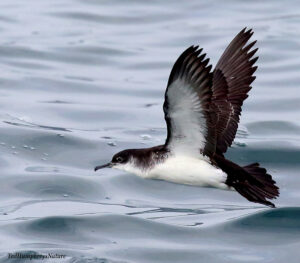
A Manx Shearwater flies low over the sea. The bird is black allover the top of its body, wings and head, and white below.

Berry Head

The 170 acres of Berry Head National Nature Reserve has some of Devon’s most phenomenal views as well as an astonishing array of wildlife. The headland is surrounded by water on three sides making it perfect for spotting marine birds and mammals.

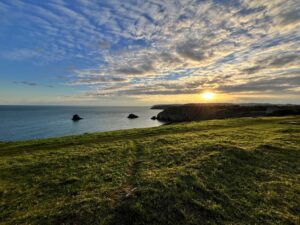
A landsca[e view of a field in the foreground, dropping off into the background of sea and cliffs against a setting sun.

For information on visiting these and other sites that are open to the public please see the Explore Devon website.

4. Find out more

See useful links on the Coast page 

Find out more about the distribution of birds on BTO’s British Bird Atlas

Devon species distributions are on the Devon Bird Atlas: devonbirdatlas.org  

The national seabird census took place over the last few years. The results were published in Seabirds Count Seabirds Count – Lynx Nature Books (lynxeds.com)  

Most of the data is accessible at Seabirds Count | JNCC – Adviser to Government on Nature Conservation  

There are regular comprehensive counts of breeding seabirds on Lundy.  A survey took place in 2023, and data is available on request from the Seabird Monitoring Programme website. 

  • Puffin – J. Shelton
  • Guillemot – Sam Turley – RSPB images
  • Kittiwake – Andy Hay – RSPB images
  • Lundy coastline – Annie Houston
  • Manx Shearwater – Edward Humphreys
  • Berry Head National Nature Reserve – Charles John

Draft